
Overview: a week of escalating risks for UK organisations
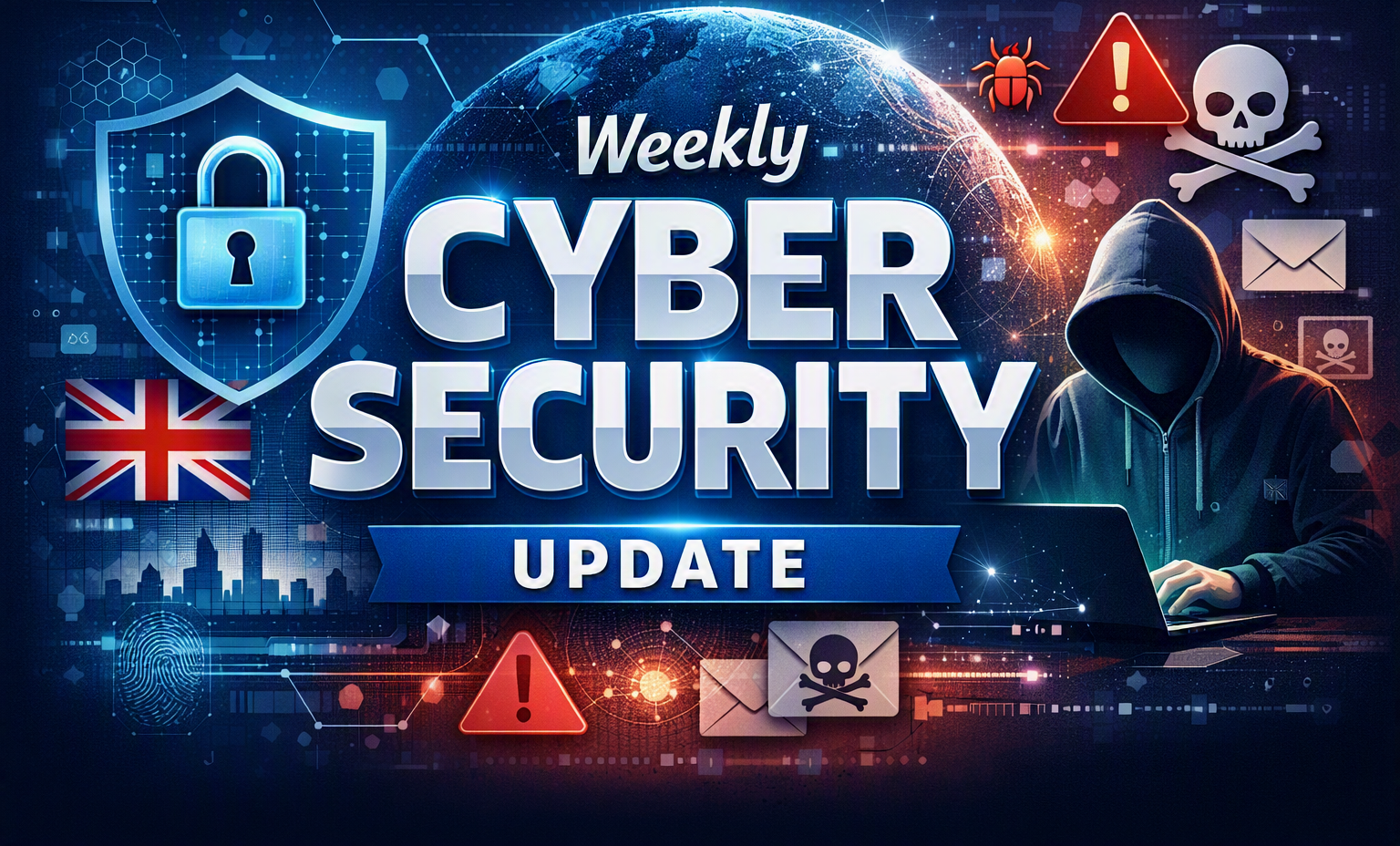
This week’s security advisories present a clear picture for UK businesses: threat actors are increasingly sophisticated, coordinating fast-moving campaigns that target people, applications, and supply chains. From AI-enhanced attacks shrinking breach timelines to targeted scams aimed at mid‑level staff and critical software flaws in widely used tools, the threat landscape continues to demand vigilance, strong controls, and practical, cost‑effective containment strategies. For UK SMEs and larger organisations alike, the message is that attackers are etching ever-closer to your most sensitive systems and data.
Targeted social engineering and credential abuse: the Phantom deal and beyond
The reporting on large enterprises facing fake merger and acquisition scams reveals a disturbing trend in which threat actors study organisations in granular detail to manipulate midlevel employees into initiating large financial transfers. This “Phantom Deal” technique demonstrates how attackers blend legitimate business language with credible social engineering to bypass controls. For UK organisations, the risk lies not just in the financial impact, but in the potential for cascading losses, including supplier disruption and reputational damage. The takeaway is clear: robust verification, dual-control processes for high‑risk transfers, and regular phishing simulations are essential components of a resilient security posture.
AI-enabled attack acceleration and the real-world timeline effect
Critical vulnerabilities in widely used enterprise platforms
Several advisories highlight vulnerabilities in tools commonly deployed across UK organisations. One notable risk involves the SonicWall SMA 1000 devices, where zero‑day flaws enable unauthenticated remote code execution. These edge devices often act as gateways into networks; exploitation could grant attackers administrative access and ease lateral movement. In parallel, the LangFlow vulnerability—tracked as CVE-2026-0768—targets a low‑code AI development platform, with active exploitation observed as attacks rise. While individual risk varies by environment, these advisories illustrate how unpatched or misunderstood configurations can translate into real, high‑severity incidents.
Additionally, an authentication bypass flaw in JFrog Artifactory (CVE-2026-82329) demonstrates how a single vulnerability can open doors to admin‑level access within software repositories. These incidents emphasise the importance of timely patching, robust access controls, and segmentation to limit the blast radius of any successful exploitation.
Insider risk, supply chain and credential abuse trends
Security researchers are noting a rise in insider‑assisted ransomware and credential misuse. The combination of compromised API keys, as seen in an attack on an AI model evaluator (METR) leading to substantial cloud credit consumption, and the broader insider threat dynamic highlights how attackers increasingly rely on compromised identities and trusted footholds. UK organisations should align access management policies with least privilege, enforce strong API key handling, and deploy anomaly detection for unusual authentication patterns to detect and disrupt such campaigns early.
Vishing, infostealers and session theft: targeting collaboration tools and accounts
Threat groups are actively targeting the trust users place in collaboration platforms. Reports of vishing campaigns against Microsoft Teams users and infostealer attacks aimed at Claude users reflect a broader trend: attackers seek to harvest session data and credentials to maintain persistence and access. For UK businesses, this reinforces the need for user education, multifactor authentication, and device hygiene to mitigate the risk of session hijacking and account compromise that can spread quickly across organisations.
Operational campaigns and attack infrastructure trends
Campaigns such as ClickFix illustrate how attackers abuse blockchain‑based addresses to update command and control dynamically. While this is a more technical detail, it shows the breadth of infrastructure abuse that modern criminals exploit to maintain stealth and control. Another notable campaign, TerminalFix, weaponises PowerShell in enterprise attacks with a multistage approach, including reverse tunnels into victims’ networks. These examples underscore the ongoing importance of rigorous endpoint protection, script control policies, and monitoring for unusual PowerShell activity as core defensive measures.
Ransomware and recruitment within attacker communities
Reports indicate that improving security can paradoxically drive ransomware groups to recruit from within, exacerbating insider risk. The UK context requires not only proactive defense but also proactive culture and policy measures to deter insider threats, combined with monitoring that respects employee privacy while providing early warning signs of anomalous behaviour.
Implications for Cyber Essentials and UK businesses
From a Cyber Essentials perspective, the week underscores several key controls: robust patch management, secure configurations for internet‑facing services, and strong identity and access management (including MFA and least privilege). It also highlights the need for tighter governance around financial processes and vendor access, as well as security monitoring that can rapidly detect AI‑assisted and automated intrusion tactics. For small businesses and managed service providers serving the UK, translating these advisories into practical, repeatable controls is essential to demonstrate compliance and resilience.
How Silicon Spa Tech Services can help
At Silicon Spa Tech Services, we specialise in helping UK organisations stay secure and compliant through pragmatic, business‑focused security. Our approach starts with a risk‑based assessment aligned to Cyber Essentials requirements, followed by prioritised remediation plans that fit your budget and operational realities. We offer: rapid patch management programmes for edge devices and critical software, IAM reviews with least‑privilege enforcement, and ongoing monitoring and incident response planning that can scale with your organisation. We also provide employee awareness training and simulated phishing campaigns tailored to your sector to reduce the risk of social engineering and credential theft.
Looking across the advisories this week, the clear message is that attackers are increasingly using AI, automation, and social engineering to pursue fast, targeted wins. A robust, well‑documented security programme that covers people, processes, and technology remains your best defence. If you’d like help implementing a Cyber Essentials–aligned security strategy, or you want a security partner to guide you through patch management, IAM, and incident readiness, get in touch. Our team can tailor a solution that fits your organisation’s risk posture and compliance needs. Contact us via the secure channel on our website: https://www.siliconspatechservices.com/contact-us

Cyber Security Advisor specialising in threat intelligence, SME risk analysis, and practical defensive guidance. He monitors emerging cyber campaigns targeting UK organisations and translates complex threat activity into clear, actionable insights that help businesses strengthen their Cyber Essentials posture and stay protected.
- Max Brown

- Max Brown
- Max Brown